Home / What Is Making Tax Digital and Who Does It Affect?
What Is Making Tax Digital and Who Does It Affect?
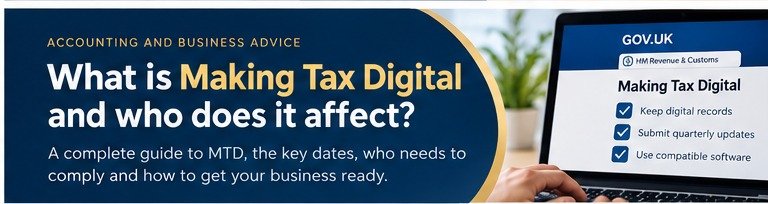
Making Tax Digital, usually shortened to MTD, is HMRC’s move towards digital record keeping and digital tax reporting. The exact obligations depend on the type of tax and the taxpayer’s circumstances, and the timetable has developed in stages.
What does MTD mean in practice?
Where MTD rules apply, businesses generally need compatible software and digital records. The purpose is to make tax information more accurate, connected and easier to report.
Why should a business prepare early?
Changing software, cleaning up records and establishing a reliable bookkeeping routine can take time. Waiting until a deadline is close creates unnecessary pressure, particularly for businesses that currently rely on spreadsheets or paper records.
What should I do first?
- Understand whether the current MTD rules apply to you.
- Check how your accounting records are currently maintained.
- Choose compatible software if required.
- Make sure income and expenses are categorised consistently.
- Reconcile your records regularly.
Accounting Hire’s Making Tax Digital Checker can help you explore the position. Because the rules and thresholds can change, use current HMRC guidance when making compliance decisions.
Does MTD mean I need an accountant?
No. Digital reporting does not automatically mean you must appoint an accountant. Some businesses can manage their own bookkeeping with suitable software. Others may prefer professional support to check records, prepare returns or provide advice.
What are the wider benefits of digital records?
Good digital records can improve more than tax compliance. They can give owners faster information about sales, costs, cash flow and profitability. That can make pricing and spending decisions easier.
What if my records are currently messy?
Do not try to solve everything at once. Start by reconciling the bank, separating business and personal spending, creating consistent categories and establishing a routine. If the backlog is substantial, an accountant or bookkeeper can often help you reset the system.
Why is Making Tax Digital important?
Making Tax Digital is part of the move towards digital record keeping and tax reporting. For affected businesses, the practical issue is not simply using a computer. It is having a reliable digital process in which business records are maintained, transactions are categorised correctly and required information can be reported through compatible software.
What should a business do before its obligations start?
Start with the records you already have. Identify how sales, purchases, bank transactions and expenses are currently captured and where the gaps are. Then check whether your existing accounting software is compatible with the obligations that will apply to you and whether your accountant supports the same system.
Why good bookkeeping becomes even more important
Digital reporting does not make inaccurate records accurate. If transactions are entered late or categorised incorrectly, the software can simply produce a faster version of the wrong answer. Establish a routine for reconciling bank accounts, recording invoices and checking unusual transactions.
What should you ask your accountant?
- Which Making Tax Digital obligations apply to my business?
- When do they begin for my circumstances?
- Is my current accounting software compatible?
- Will you review my digital records?
- What information will I need to provide each month or quarter?
- Are software costs included in my accounting package?
How much work is involved?
The answer depends on how organised your records already are. Businesses that already use accounting software and reconcile transactions regularly may find the transition more straightforward. Businesses relying heavily on spreadsheets, paper records or irregular bookkeeping may need more preparation.
Use the transition to improve financial management
Compliance changes can be an opportunity to improve how you run the business. Regularly updated accounts can give you earlier visibility of sales, margins, unpaid invoices, expenses and cash. That can make it easier to spot problems before the year-end accounts are prepared.
Use the Accounting Hire calculators for related planning and review the Making Tax Digital guide for additional information. If you want help selecting software or preparing your records, speak to an accountant through the accountant directory.